We’ve moved to our new location at 4205 San Felipe Rd, Suite 200, San Jose, CA 95135


How Long Do Dental Fillings Last? When It’s Time for a Replacement

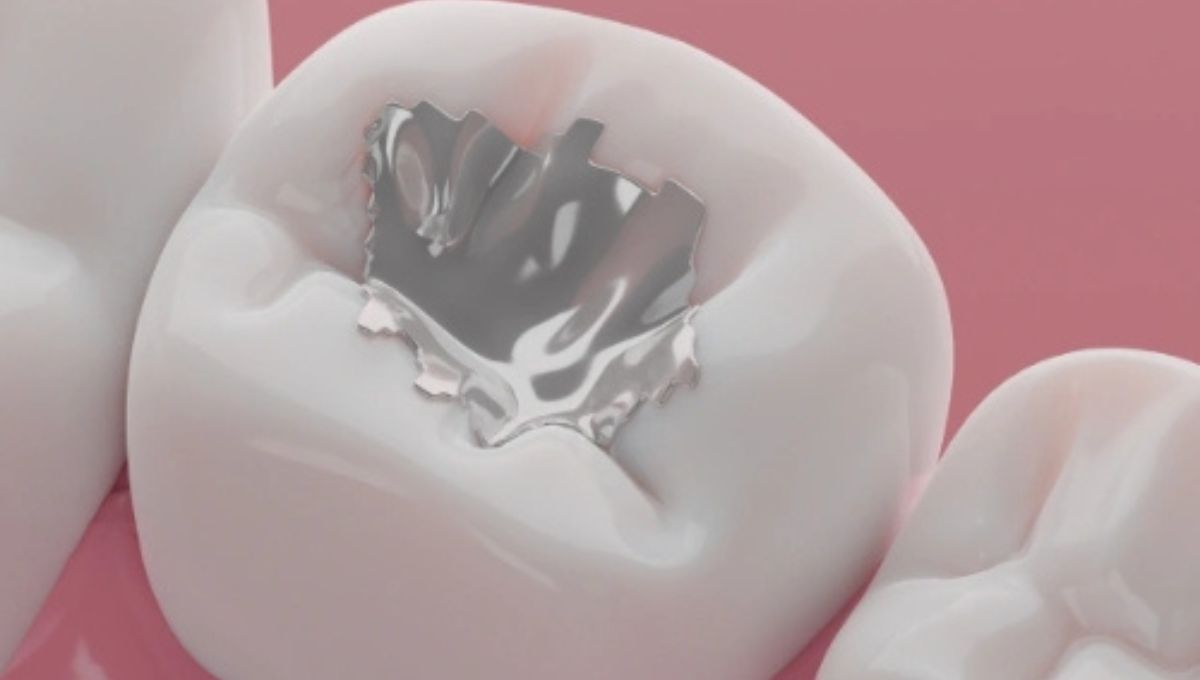
Picture this: You’re enjoying your favorite cold drink, and suddenly, you feel a sharp pain shooting through your tooth. It’s a moment many can relate to, especially if you have dental fillings. Over time, fillings can wear down or even crack, causing discomfort or further damage. While fillings are a vital part of maintaining oral health, their longevity and the right time for a replacement are key to preserving your smile.
In this blog, we’ll explore how long dental fillings last, the different types of fillings, and when it’s time to consider a replacement. Let’s dive into the factors that affect their lifespan and how proper care can make them last longer.
Types of Dental Fillings
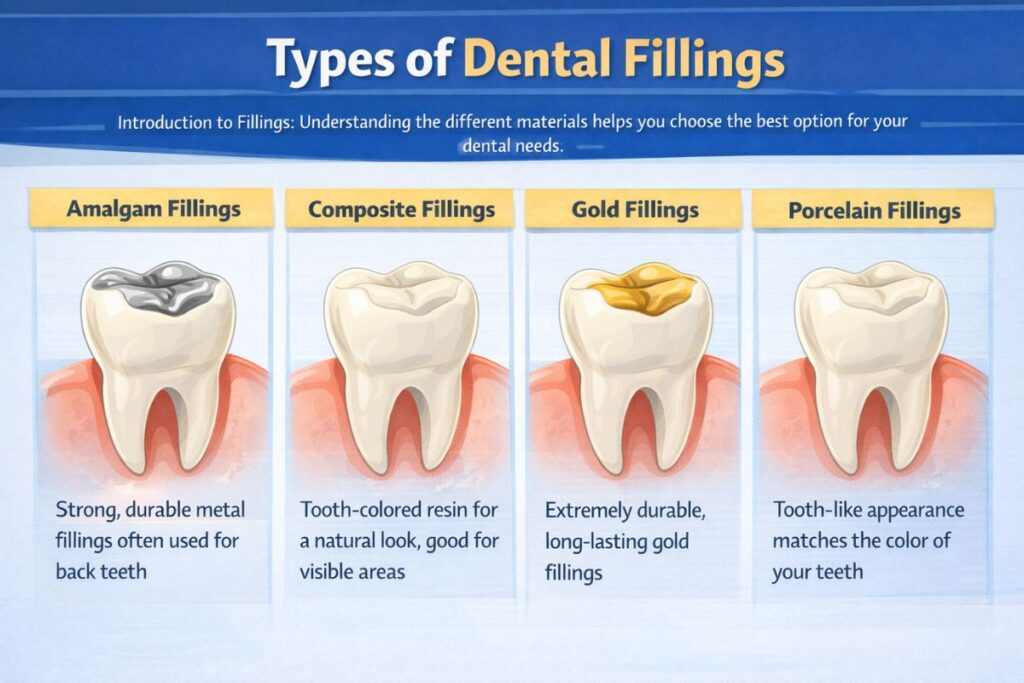
Introduction to Fillings:
Dental fillings come in several materials, each with different properties, benefits, and challenges. Understanding these materials helps you choose the best option for your dental needs.
Amalgam Fillings: These are made from a mixture of metals like silver, mercury, tin, and copper. Known for their strength, amalgam fillings are commonly used for back teeth that experience heavy pressure during chewing.
Composite Fillings: Made from a resin and fine glass particles, composite fillings blend with the natural color of your teeth, making them ideal for visible areas. While aesthetically pleasing, they are slightly less durable than amalgam fillings.
Gold Fillings: These are one of the most durable options and can last for 15-20 years. While gold fillings are not as aesthetically appealing as other materials, their strength and longevity make them a solid choice for individuals looking for a long-term solution.
Porcelain Fillings: Known for their natural tooth-like appearance, porcelain fillings are a great option for those looking to match the color of their teeth. While they are durable, they can be more prone to chipping compared to gold or amalgam fillings.
Pros and Cons:
- Amalgam:
Pros: Strong and affordable, ideal for molars.
Cons: Less aesthetic, noticeable in the mouth.
- Composite:
Pros: Natural look, versatile.
Cons: Shorter lifespan, more prone to staining.
- Gold:
Pros: Very durable, lasts long.
Cons: Expensive, not aesthetically pleasing.
- Porcelain:
Pros: Aesthetically pleasing, durable.
Cons: Can chip, more expensive than other options.
Understanding the pros and cons of these materials will help you make an informed decision about which dental fillings in San Jose are right for you.
How Long Do Dental Fillings Last?
Average Lifespan:
- Amalgam: Typically lasts between 10 and 15 years. Known for durability and resistance to wear, especially in the back teeth.
- Composite: These fillings generally last 5-7 years. While they provide a natural look, they are less durable and may require replacement sooner than amalgam.
- Gold: The longest-lasting filling, gold can endure up to 15-20 years. Ideal for patients looking for longevity, but the cost is higher.
- Porcelain: Porcelain fillings can last around 10-15 years, though they are more prone to chipping, especially if they’re located in areas subject to heavy pressure.
Factors That Affect Longevity:
- Oral Hygiene: Brushing and flossing regularly helps prevent plaque buildup and decay around the filling, prolonging its lifespan.
- Diet: Diets high in sugar and acidic foods can speed up the deterioration of fillings. Limiting sugary snacks and drinks can help protect your fillings.
- Teeth Grinding: If you grind your teeth, the pressure can wear down fillings over time, especially composite and porcelain types.
- Location of the Filling: Fillings in areas that endure heavy pressure, like the back teeth, may wear out faster than those placed on the front teeth.
Maintaining good oral habits and avoiding foods that are too sticky or hard will help extend the life of your fillings.
Signs It’s Time for a Replacement
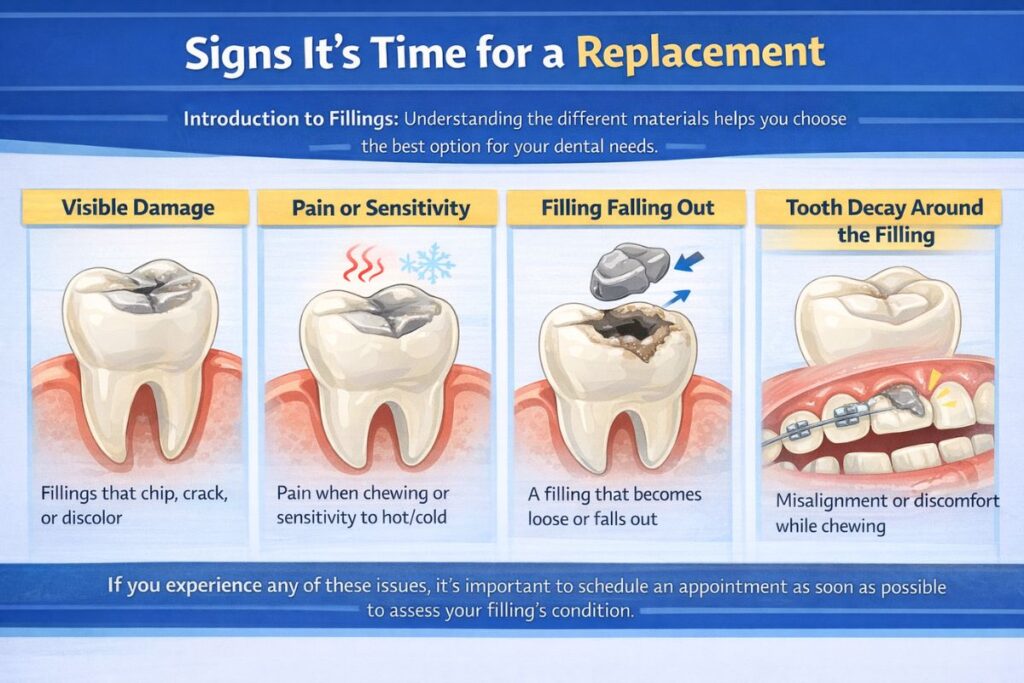
Visible Damage:
Fillings can chip, crack, or discolor over time, especially in areas exposed to food or drink. If you notice visible wear, it may be time to replace your filling.
Pain or Sensitivity:
Pain when chewing or sensitivity to hot and cold temperatures can indicate that your filling has weakened or come loose. If the filling is no longer providing proper protection, your tooth may be vulnerable to decay or further damage.
Filling Falling Out:
A filling that becomes loose or falls out entirely is a clear sign that it needs to be replaced. In this case, it’s essential to visit your dentist as soon as possible to prevent further tooth damage.
Tooth Decay Around the Filling:
If you notice new decay forming around the edges of your filling, it may indicate that the seal has weakened. This can lead to bacteria entering the tooth, causing further decay and infection.
Shift in Bite:
If your filling feels out of place or causes discomfort while chewing, this could indicate a misalignment or wear and tear. A dentist will assess the fit and determine if a replacement is needed.
If you experience any of these issues, it’s important to schedule an appointment with Arbor Dental Group as soon as possible to assess your filling’s condition.
How to Prolong the Life of Your Fillings
Proper Oral Hygiene:
Brushing twice a day and flossing daily are essential to keeping your fillings in good condition. This prevents plaque buildup around your fillings and helps avoid decay.
Avoiding Hard or Sticky Foods:
Hard foods like ice, nuts, or candy can crack or dislodge fillings. Sticky foods, such as caramel or taffy, can pull fillings out of place, so it’s best to avoid them.
Regular Dental Check-ups:
Visiting Arbor Dental Group for regular check-ups can help identify any potential issues with your dental fillings in San Jose early. Routine cleanings and exams allow your dentist to assess the health of your fillings and make recommendations for replacements when needed.
Incorporating these habits into your daily routine will help you maintain your fillings longer, ensuring your smile stays healthy and strong.
What Happens When a Filling Needs to Be Replaced?
Procedure Overview:
When you visit Arbor Dental Group for a filling replacement, your dentist will first remove the old filling and clean the affected area. The decayed or damaged tooth structure will be treated, and a new filling will be placed. The process is typically quick, and your dentist will ensure that the new filling matches the color and texture of your natural teeth.
Recovery and Aftercare:
After a filling replacement, avoid eating hard foods for the first 24 hours. You may experience some sensitivity, but this should subside after a few days. Continue brushing and flossing regularly, but be gentle around the treated area. If you experience persistent pain or discomfort, contact your dentist for follow-up care.
To sum up, dental fillings are crucial for maintaining your oral health, but they don’t last forever. Regular check-ups at Arbor Dental Group can help detect any issues with your fillings early on and ensure your smile remains healthy for years to come.
If you’re experiencing pain, discomfort, or any of the other signs that it’s time for a replacement, don’t hesitate to schedule an appointment with us. Your dental health is important. Let us help you keep it in top shape.
Contact Arbor Dental Group today to book your consultation and ensure your fillings are still doing their job!
What People Want to Know
How long do dental fillings last?
The lifespan of dental fillings depends on the material. Amalgam can last 10-15 years, composite fillings 5-7 years, gold 15-20 years, and porcelain 10-15 years.
When should I replace my dental filling?
Replace your filling if it’s cracked, discolored, loose, or if there’s decay around it. Sensitivity or discomfort while chewing is also a sign it needs replacing.
Can fillings be repaired instead of replaced?
In some cases, small cracks or chips can be repaired, but if the filling is severely damaged or worn, replacement is usually necessary.
What are the signs of a worn-out filling?
Signs include visible damage, pain or sensitivity, a filling falling out, or new decay forming around the filling.
Can I eat normally with a new filling?
After a filling replacement, it’s best to avoid chewing hard foods for 24 hours to allow the filling to fully set and prevent any damage.
 Back
Back Back
Back